Working on your accent and speaking command even if not in the Middle East

nfl

Most Arabic students will have long periods of time where they are away from the Middle East and therefore not in a position to have frequent conversations in Arabic. This isn’t the ideal for developing high-level speaking skills. It’s just the way things are.

What it isn’t is a good excuse for letting your spoken skills decline. Continue reading “Working on your accent and speaking command even if not in the Middle East”

Catching up with Greg Gause on Saudi Arabia, Arabic and Texas A&M

Interested in more content like this? Get new posts via Twitter at @nathanrfield1 or by signing up to receive by email. 

Gregory_Gause

F. Gregory Gause III is the head of the International Affairs Department at the Bush School of Government and Public Service, Texas A&M University and a world-renowned expert on Saudi politics. I caught up with Professor Gause recently in Rehoboth Beach. Some questions of interest to Real World Arabic readers that I asked my old friend and fellow Delaware native:

In your recent Foreign Affairs article you challenged a popular policy notion that the Saudi government can somehow control or stop Global Salafism. You argued that they lost control decades ago “if they ever really had it.” I happen to agree with you 100%. At the biggest picture counter-terrorism policy level, what does this mean in dealing with this new spread of populist-ISISism?

I think it means two things, one Saudi-centric and one having to do with, if you will, the “targets” of salafi proselytization, whether that be by Saudi-supported institutions or by violent jihadists like ISIS.

Continue reading “Catching up with Greg Gause on Saudi Arabia, Arabic and Texas A&M”

Talking Arabic as a 2nd Language Teaching & Learning Strategies with David Wilmsen

Wilmsen photo

Professor Wilmsen is author of several books on Arabic, including his most recent Arabic Indefinites, Interrogatives and Negators: A Linguistic History of Western Dialects, and has taught the language at Georgetown University, The American University in Cairo, The American University of Beirut, and now the American University of Sharjah. I sat down with my friend and former Professor to discuss how today’s students can get good at Arabic.

Many people don’t realize this – you have become a distinguished scholar of Arabic yet you didn’t know a word of the language until you were 31 years old. What does that say about the theory that “younger is better” when it comes to language acquisition?

In theoretical linguistics, there is an assumption that younger is better, and that there is a certain critical period where one needs to learn a language. Some say that window ends five years of age, other say 15 years of age. In any case, there seems to be agreement that once you reach adulthood it closes off.

I say it’s not so simple. Many of these debates cover whether adult learners use the same parts of brain, as children do, but we can’t really study what’s in the brain. We can’t see it. We really don’t know.

The second thing is that adults are involved in so many things that kids aren’t involved in. Adults have more things on their mind, like career and family. Whereas kids can absorb everything of language is around them. So perhaps it is more a question of priorities and not whether there is a natural advantage for children versus adults.

Theoretically, 31 is later, but I have seen others who have learned at that age too so it’s not just me. I may be slightly talented at learning languages, but I had a certain interest and passion that was key. As an adult, if you decide you are going to learn a language, you have to find something about that language that turns you on. It’s a way of self-motivation.

Find things that you like about the language. A personal example: Once when I was going through a dictionary of Egyptian Arabic, trying to find out how many words I know, I found myself smiling in delight at the sheer fun of hearing the words in my mind’s ear, as it were, while reading them off. This isn’t just another exercise focusing on grammar rules. That’s the kind of thing that gets me excited.

You recently moved from the American University of Beirut to the American University of Sharjah. The Gulf in general is carving out a reputation in the Arabic studies field. Where would you like to see the program after a couple of years?

As you have been writing about at Real World Arabic, given the relative or perceived risk of places like Egypt, the Gulf has a justified reputation of being as safe as milk. That’s a big advantage for universities here. There is a boom now.

What I hope to do is make the American University of Sharjah the center of it.

We have 30 students here right now. The AUS has exchange agreements with other universities in the West. Where they can send roughly equal numbers of Emiratis to American universities, and vice versa. Most the students are American but Maastrict University in Holland is also very active in sending students to Sharjah.

One thing I would say is that the UAE and the Gulf have a reputation of being hard for Arabic students to get speaking opportunities due to the presence of many foreign workers. Some places in the UAE are challenging in this regard, such as Dubai. But there have been many studies lately which call into question the myth that full immersion is the only way to go. There are lots of benefits for students to be inserted into environments where they find bi-lingual speakers and can make real gains.

You have taught thousands of students over the years. Is there a specific trait that you see in those students who reach the highest levels of Arabic proficiency?

It is hard to point to any specific trait or characteristic.

What I have seen in common with all students who reached a very high level is that they found that Arabic or some element of Arabic was worth investigating for its own sake. My best students – probably all were motivated by a degree by career advancement. But they still found an element of the language that they were captured by. They found it fascinating and that drove them to reach a very high level.

Many years ago, when I took your class, you said something along the lines of “Fusha is Amiya.” That has stuck with me given that many approaches to teaching seem to portray, perhaps unintentionally, a significant Gap between the two which can make it intimidating for Arabic students. Is in fact “Fusha Amiya?”

Yes. Fusha and Amiya have the same types of constructions and agreement between adjectives, gender etc. And if you do actual word counts they are surprisingly similar. Take for example the Frequency Dictionary of Arabic by Dill Parkinson and Tim Buckwalter. They found that about 80% of the vocabulary is shared.

The major difference between Fusha and Amiya is in two areas, interrogation and negation. For example, ma hatha matha taamel, shu hatha, eysh hatha etc. But the structures and the vocabulary are shared.

If I might play devil’s advocate about what you identify as “the major differences.” If the major difference  is  Ma instead of Shu or Eysh – mentally isn’t that something that is as much a Tweak as anything? Plugging one word in here and there? A difference for sure, but not the massive gulf that is sometimes portrayed that intimidates Arabic students…..

Yes. Good point.

Does your view on the similarities between Fusha and Amaya influence your teaching tactics?

Yes. Here is one example. Oftentimes I have “heritage learners,” meaning people from Middle Eastern backgrounds who grew up in Europe or the US, who have spoken Arabic at home, but never learned formal. What I find is that they often speak colloquial Arabic at nearly native speaker levels, while often having a minimal command of Fusha. When they have trouble with a certain point in Fusha, I say to them “well how do you say that in Amiya?’ And “Boom” they immediately understand.

What’s the # 1 mistake that you see Arabic students make that prevents them from reaching a high level?

They let themselves get intimated. Everyone is going to find learning Arabic hard. It’s natural.

If you find something in the early stages becomes challenging, it is important to figure out how you can get over that early stage hurdle. Like math, if you don’t get the early lessons, you won’t get the later lessons.

For example, I sometimes give a struggling student a trick for mastering verb conjugations: I say, “I want you to go home and take one verb, practice it in the past, do it for half an hour; go do something else, come back and do it for ten minutes, go do something else, come back.” This is a workable technique that has the backing of research. Don’t let that mental block prevent you from making permanent progress.

However, there is an aspect to it that the students aren’t responsible for. Teachers often want to teach them Fusha. Whereas I think you should learn to speak the language first. For example, if I go and teach you Arabic, words like Al-Bab [door], Al-Beet [house], Muftah Al-Siyyara [car keys]. Not a single one is cognate to a European language, but we are talking about things that are in the House. These are more conceptually close to hand, then if we are talking about Al-Umam Al-Mutahada (the UN). They are conceptually closer and focusing on these at an early stage can be more effective.


What’s a benchmark for level of fluency the student should be aiming for?

I had a teacher of Spanish once who laid out a role of thumb that I think is quite good. She said the goal of a language student shouldn’t be that a student be mistaken for a native speaker of a region they are in. If in Mexico, be mistaken as a Mexican, by Mexicans. You want to be mistaken for a native speaker of Spanish from some other region, for example, while you are in Mexico, you might be mistaken for someone from Puerto Rico. That’s a good benchmark. When I was in Cairo, people would sometimes ask are you from Tunis? Then I once got “are you from Bosnia.” But the moment I thought I had really arrived was when someone asked me if I was from Alexandria.

In the last ten years in the Middle East social media has exploded, you have Facebook, Twitter. More people are both writing in Amiya, for social reasons,t hat wasn’t happening before. And while Moroccans and Iraqis have been exposed to Egyptian dialect through cinema and music for well over half a century, this new trend seems different. Are the borders between Dialects being diluted because of this changes?

With television I think this was happening before social media. A colleague of mine has been looking at this . There is a sort of common Gulf dialect, shared from Kuwait to Muscat, Oman; he finds it in all Gulf States, a pan Gulf dialect;

It’s happening from Morocco to the Gulf. People know more about Moroccan Arabic outside of Morocco than ever before.   When you are looking at social media, you are looking at the words, commentary that is written. If you have got a blog, anyone who can write Arabic can write on it. You are now seeing Moroccans writing on Lebanese blogs in Colloquial. You don’t just hear it, you see it. It’s an interesting trend to watch, and it certainly presents good opportunities for those studying Arabic, because seeing it written cements it in your mind.

Finally, do you have any advice on a specific tactic that you tell all Arabic students to follow?

Get to know one text really well. Text can be defined very broadly. It could be a movie, a written text, a transcription, for example, a transcription of an Amiya discussion. If you read it over and over again, you learn. The text could be any extended discourse in any language. What you have written about on your website – I did the same thing with an Egyptian film called Al-Bey al-Bawwab. About a man coming from Upper Egypt and starting out as a doorman but who gets rich in real estate scams. I used that as a test of my proficiency. I could understand the plot at first. That was a way of measuring my own progress by how much more I understood the film each time I watched it.


Did you find the issues discussed in this post helpful to your work as an Arabic teacher or a student? Sign up to receive future content via Email or through Twitter at @nathanrfield1 
Screen Shot 2016-07-29 at 10.01.18 AM

Weekly Spoken Arabic Transcript Drill: #1

New Feature: Each week I will do a practical analysis of a transcript of conversation in colloquial Arabic, emphasizing the points students should be focusing on to develop high-level spoken. Two Learning Assumptions behind this post:

  • #1 – because “Fusha is Amaya” reading/seeing Spoken Dialects in print allows people who have studied MSA to make certain connotations and Fast-Track their retention through an economies of scale studying effect
  • #2 – Transcript work combined with audio allows you to recognize  and internalize accent differences and pronunciation differences faster than they would through the normal process of learning Colloquial.

This week’s Drill: 

The first 20 minutes of a 2015 documentary on Southern Egypt, a poor, rural and under developed region known as The Said (see transcript here).  Why did I choose this one? It is one degree of difficulty to communicate with the educated Arabic intellectual. It is more difficult to understand and to communicate with  those from what we might call “blue-collar backgrounds,” in this case construction workers from the Said. If you can do that, you can engage with anyone.

13 takeaways from the First 20 minutes

Continue reading “Weekly Spoken Arabic Transcript Drill: #1”

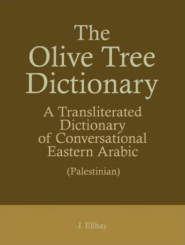
A review of the Olive Tree Dictionary on Spoken Levantine Arabic

I spent several hours today at the Library getting a closer look at the various spoken Arabic dictionaries in circulation so the chapter on written resources in my upcoming book on developing high-level spoken Arabic skills is as practically useful as possible.

One resource that I had heard many good things about but hadn’t seen myself until this morning is The Olive Tree. After flipping through it for an hour, now I understand why it is so highly regarded.

Screen Shot 2016-08-16 at 10.46.21 AM.png
The book is truly indispensable for Arabic students. Frankly, I don’t see how anyone whose priority is Levantine Dialect can get away with not having a copy (or at least regular access to one)

The Only “Bad” News: 

Continue reading “A review of the Olive Tree Dictionary on Spoken Levantine Arabic”

What’s the situation for Arabic study in Egypt? My chat with the Directors of ILI

cairo_panorama

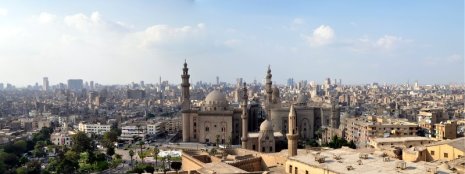
Before 2011 Cairo was the undisputed top location to study Arabic in the Middle East. The last 5 years have been tough for Egypt and its schools that specialize in teaching Arabic to Americans and Europeans. Many US study abroad administrators and students are wondering what is the situation now, in 2016?

To find out more, I caught up with Aimen Hassanen, Managing Director of Cairo’s International Language Institute, and Karim Rogers, Executive Director of the International House Cairo, for a frank talk:

Let’s start with the Elephant in the Room – security. Yes it’s a serious issue that needs to be taken into consideration. However, it is also true that the media tends to dwell on negatives. This can make it hard for those outside of Cairo to know exactly what is going on. So let me just ask directly: is Egypt a safe place to study Arabic?

In my honest opinion, the American Embassy is extremely conservative with the travel warnings compared to European embassies. If you look at the European embassies, Cairo is in the Green.

Even during the Revolution, despite the fact that we had a lot of action in the areas near our school, we never shut a single day. We’ve been working very hard with universities to revive business; it takes time.

Our #1 strategy post-Revolution is attract back universities and study abroad customers. And we are seeing some great results. For example, this past year, for the first time in 5 years we had 5 [European] universities come back and complete a full-academic semester. That’s the first time that has happened post-Revolution.

Compared to Europe, these schools are finding Egypt a Safe haven.

Is this caution [about security] strictly from the US Embassy or is it American institutions in general? What about US universities that have sent students to Cairo to study Arabic in the past?

Yes, this seems to be American institutions in general.

Some of the [American] university professors are slightly conservative [about the risk issue]. Although this summer we have had lots of students from NYU, Texas, Georgetown.

However, at ILI we have always focused more on the European market, less so on the US market and so we’ve had more European students than Americans. Europe has been our core market. But we are going to the MESA conference in Boston this November.

Today in the US and Europe we have high schools and even elementary schools competing to offers languages like Chinese, Arabic etc. This wasn’t happening 15 or 20 years ago. Are you seeing that the Arabic language capabilities of students – at the time they come to ILI have improved compared to the past?

We are finding that Europeans at the point of placement when they come to us in Cairo – are at a higher level compared to US students, on average. If you look at US high schools, the focus is on Spanish, than Chinese.

Arabic is higher on the agenda in Europe. For example, there are more Arabic degree programs at European universities compared to the US.

Post-Revolution the Arabic level of Europeans has noticeably gone up. They have had to adapt. There is more and more interest in the higher level [government] positions that require Arabic, to focus in great detail on diplomatic , economic topics for example.

Such a surge in interest from European embassies has even forced us to adjust our placement system… we are now authorized to run the C2 diplomatic tests from ILI; most of the European diplomats are passing with flying colors.

Is it fair to say that the Europeans consider the learning of Arabic more important to successful diplomatic work than the Americans? Based on what you are seeing from your perch at ILI… 

Absolutely. The European diplomats definitely take the learning of Arabic more seriously than their American counterparts. … John Casson, the British ambassador to Egypt, is practically a native speaker!

What are the goals for ILI during the next few years?

In 2017, our #1 goal is to ensure we get the Institute back to 100% occupancy. We want to return all of our customers and get back to 2010 levels. We are headed in that direction.

Post-2017, we want to expand to other areas of Cairo – places like Maadi, which are in a different part of the city than our main facility.

Building up our Teaching Arabic as a foreign language program is a huge priority. This is something we had done very well at in the past but got away from. Many European universities are looking for their teaching instructors to have more formal credentials in this regard. Our program is catering to both Egyptians and non-native Arabic speakers and it’s a major priority for us.

Another long-term goal is to expand into the international market. Scaling the market – but options are limited in the current Middle East situation.

That’s very interesting given the situation now in the broader Middle East. I don’t want you to give away your business strategy – but anything you want to share about particular ideas on location? 

We are looking around at various places.

Jordan we are not a fan of. When the Arab Spring happened, many foreign universities decided to concentrate on Jordan as a study abroad location instead of Egypt. But the schools and the students were surprised at how expensive Jordan was comparatively. Many people thought the lifestyle there was less interesting than Cairo…they also found that the Arabic levels of the students coming out of these programs wasn’t as good as from Egypt.

It’s a tough market – in 2006 we set up a school in Syria.  We wanted to strategically position ourselves in Syria. We saw that as a very strategic market. But then there was the tragic assassination of the former Lebanese Prime Minister Rafiq Hariri. We left almost immediately after that happened given that the Syrians were accused.

We are exploring other locations and will continue to evaluate the market.

I am trying to choose the phrase that most accurately characterizes your outlook on the situation for ILI and Arabic study in general in Cairo based on what I have heard from you here. Am I right to say you are “cautiously optimistic?” 

No. We are “very optimistic.”


Are you an Arabic student or teacher interested in getting more content on these topics?  Sign up to receive posts by Email or via Twitter at @nathanrfield1

Screen Shot 2016-07-29 at 10.01.18 AM


Coming in September – The E-Text Book on developing practical spoken Arabic skills

“Taxi:” a highly underrated resource for spoken Arabic students

41jyWBbtVPL._SX337_BO1,204,203,200_

This is a book I strongly recommend for Arabic students, especially those trying to develop their speaking skills. From the original book cover:

حواديت المشاوير الذي لاقى نجاحا نقديا وجماهيريا كبيرا وغير متوقع، فأثنى عليه الكثير من الكتاب والنقاد واستضافت مؤلفه عدد من البرامج التلفزيونية مثل العاشرة مساء والبيت بيتك والقاهرة اليوم، ووصفه د. عبد الوهاب المسيري بأنه “عمل إبداعي أصيل ومتعة فكرية حقيقية”، وقال عنه د. جلال أمين أنه من أجمل ما قرأ من كتب في وصف المجتمع المصري كما كتب عنه صفحة كاملة بجريدة المصري اليوم. والكتاب عبارة عن حوارات بين الراوي وسائقي التاكسي بالقاهرة يتناولون فيها بصراحة بالغة أوضاع البلاد والسياسة والاقتصاد والتطرف والمظاهرات والجنس وحياتهم وهمومهم الشخصية. كتاب ممتع ومرآة صادقة لفئة لماحة تتعامل مع المجتمع كله. المؤلف خالد الخميسي حاصل على ماجستير في العلوم السياسية من جامعة السوربون، إعلامي ومنتج ومخرج وكاتب سيناريو، له العديد من الدراسات الاجتماعية والسياسية، ويكتب في عدة صحف

The Good News for Arabic students: 

Continue reading ““Taxi:” a highly underrated resource for spoken Arabic students”

My 5 market theories that explain the declining Lebanese book market

Great article in this week’s Economist:

TO JUDGE by Librairie Antoine in Beirut, books are faring well in the Middle East. The bright, airy branch in Beirut Souks, a shopping centre, has ceiling-to-floor shelves on all three levels. Yet even if the bookshop is as swish as any on a British or American high street, publishing in Arabic is struggling.

One reason jumps out: most of Antoine’s books are in foreign languages rather than Arabic. French and English each account for about 40% of sales; Arabic, for only 20%, according to the company. “People aren’t reading as much in Arabic, not just here but across the region,” says Emile Tyan, Librairie Antoine’s commercial director, who also heads HachetteAntoine, a joint venture with a French publisher.

I was especially interested because I’ve been to all of the stores in the article.

I’ve found the same situation in various bookstores in Egypt and Saudi Arabia.

My 5 Theories on Why:

(1) The Rise of English as the language of “sophistication” made it harder for the Arabic publishing industry to make money

Continue reading “My 5 market theories that explain the declining Lebanese book market”

Lebanese Joining Daesh: Because Life with it is better

My Translation and Analysis. 

Screen Shot 2016-06-17 at 8.50.36 AM


A reader sent me a very interesting article in Lebanon’s Al-Saffir newspaper.

The article, which I translated below, describes the Court-room defense of two young Lebanese men, who made an initial decision to attempt to go to Syria to join the Islamic State. However, they claim they realized immediately this was a mistake and came home before engaging in any violence.

What they are saying should be viewed with some skepticism– their attempt to play down the extent of their attraction to ISIS is likely an attempt to get a lesser sentence.  But still, it is worth the read and there are lots interesting nuggets of information.

The Translation & Commentary at the End: 

Rarely does a day pass that those who have become convinced of the ideas of terrorist groups in Syria and then go to join up,  are called to account before the Military Tribunal

Yesterday, the Tribunal heard from two of these – who explained their motivations. Each has their specific motivations for what causes them to leave their homes/ families to travel to “the land of Jihad. “

The first, Guy A. 21 years old.  Left his home to go to the port of Tripoli, without even telling his parents about his travels to Turkey, and then onward to Raqqa.

Guy A, who was born in a poor rural village in the Lebanese countryside, never sought out anyone to tell him about “the State.”

He first came in contact with the group, when he received a message via WhatsApp that was sent to the wrong address. It was from someone named Abu Fulan, asking for someone else named Abu ABC..

Despite the wrong number, Guy A stayed in communication with the guy who called him, who convinced him to travel to Syria to join the group, because “life is better with Daesh.”

Guy A wanted to join the fight.  He woke up one morning, took camo pants and military boots from a store owned by his father and uncle, and then headed towards the Port, with the intent of contacting Al-Iraqi upon arriving to Turkey, with the goal of making it to Syria.

However, at the port, the young man felt he made a bad decision. He decided to return to his house. He asked the border control officer to give him back his passport, which aroused suspicion. Guy A’s luggage were then opened, he was questioned, and finally his plans of travelling to Syria were uncovered.

Yesterday, Guy A addressed the Military Tribunal, responding to questions, and expressed his regret:  “I swear to God I don’t love Daesh.”  He just wanted to put it all behind him and go back to his studies.

However, the story of the second person, Guy B is different than Guy A.

A native of Tripoli, Guy B was working in a café. He received a phone call from his friend, Hashem Al-Haj, aka “Abu Mujahidd” who was working carrying a trolley in the streets selling cake.  He implored his friend to join Daesh, and that he would really improve his economic circumstances which weren’t great – and improve his ability to take care of his wife and two sons by becoming “super rich”.

Guy B, totally naively, believed this guy’s promise that Daesh would pay a salary equivalent to that of a general in the American Army, or $6,000/month.

Guy B – heard this and agreed, before his friend was killed during a battle.  Guy B then made his way into Syria via a Turkish driver who happened to speak Arabic.

At the first camp, there were hundreds of people, of various nationalities.  On Day 2, Guy B was moved to a different camp in Jarablus, affiated with Daesh, led by the commander Abu so and so. 

Immediately after morning prayers, Guy B had to join with a group to receive Shariah lessons from a Saudi member of Daesh.

Participating in the actual fighting was delayed and the group had to go through military training, because of air attacks by the Syrian Army against the terrorist positions.

When Guy B heard this, he was terrified and decided to get out while he still could, without getting the money he was promised.  He told Abu X about his desire for this, but he advised him to not think about the issue.

But getting into Daesh locations and getting out are different things.  They grabbed him and moved him by car to a different location.  There, he was imprisoned for 15 days and interrogated about his desire to return to his country. He was then released and allowed to return to Turkey to work there in order to raise the money to pay for a plane ticket back to Lebanon.

He expressed his regret to the court: “They tricked me….It wasn’t for me. I don’t want to kill and slaughter.”

After the Defense finished, the Military judge sentenced Guy B to hard labor for two years and the loss of his civil privileges (no voting, no working in Government jobs). ; and Guy A to one year.


Some Commentary: 

(1) Are these articles common? 

For those who don’t read Arabic — and might wonder – are there lots of articles published  like this that provide good insights into the local appeal of ISIS?  Not that I am aware of. Therefore this article is more interesting because of its uniqueness.

(2)  “I did it for the cash” defense…  

Room for skepticism?  It is hard to believe that anyone in Lebanon – where average salaries are about $1,300/month – could really believe they’d get paid $6k to join ISIS. My hunch is that maybe money was a factor but there had to have been at least some meaningful sympathy with the group’s message too. But that probably isn’t something you would tell a judge in this case if one is looking to convince a judge you deserve a lesser punishment.

(3) “I didn’t contact them – they contacted me accidentally” 

Again, a smart thing  to tell a judge yet seems there has to be slightly more to the story.

Although there could be something here. When I lived in Lebanon I bought a standard burner phone, brand-new at the local store. I would occasionally get Spam-type Text messages from religious charity type organizations raising money related to the Syrian Civil War.  This was sometimes a bit creepy.  How did they get my number? Clearly, someone somewhere has a mass phone number list.

So it is plausible it was a truly random “wrong number” from a guy that just happened to be a recruiter. Probably also true though that somewhere along the line he expressed an indicator of support for the cause, that made have something to do with getting the “Wrong number” text.

(4) Deep religious beliefs not necessarily the primary motivator

While both were clearly Sunni,  their decision to join –doesn’t seem to be about some kind of deep religious motivation, although the article says nothing about this. I am also skeptical it was really only about the money for Guy B. It seems more about the appeal of being apart of some greater Cause. Something different and exciting than either – both with mundane, very low-level jobs could ever find otherwise. 

In any case, it seems the judge made a reasonable judgement (based solely on what can be ascertained from the article) that these two guys probably aren’t hard-core true believers in the ideology and sentenced them to a pretty light sentence. Even more than that they are both, but especially the Second guy, extremly lucky to have even made it back alive from a dangerous situation.

Why did Al-Jazeera’s ratings tank in 2012 but reach record highs in 2015?

Below is detailed viewership data* from the two pre-Arab spring and 3 post-2011 seasons of the Al-Jazeera talkshow Al-Itijah Al-Muakis (Opposite Direction).

It is probably the most-watched political talk show throughout the Middle East.

Screen Shot 2016-05-24 at 12.26.43 PM
Pre and Post 2011


 The Main Takeaways:

(1)  Before 2011, Opposite Direction was reasonably neutral.  Continue reading “Why did Al-Jazeera’s ratings tank in 2012 but reach record highs in 2015?”